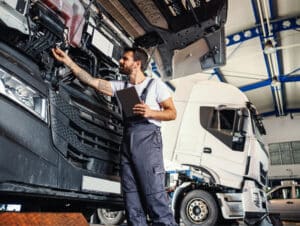
Most automotive ERP systems weren’t built with growth in mind.
They were built to keep things under control. To process transactions. To make sure numbers match at the end of the month. And for a long time, that was enough.
But the automotive industry doesn’t stand still anymore.
Importers are expanding into new markets. Dealer groups are evolving into service-driven businesses. Customers expect faster, more connected experiences. And suddenly, the system that once held everything together starts to feel like the thing holding everything back.
So what if your ERP didn’t just manage your business… but actually helped you grow it?
Growth is getting harder, not easier
If you’re an automotive importer working with a dealer network, you’re probably feeling it already.
You’re expected to have tight control over pricing, inventory, warranties, and financials across the entire network. At the same time, your dealers need the freedom to move fast and serve customers locally.
That balance is hard to get right.
At the same time, ERP transformations themselves are no small task. They’re complex, resource-heavy, and often take years to fully deliver value.
And even when they do go live, the results aren’t guaranteed.
According to McKinsey & Company, only 20% of companies capture more than half of the expected value from their ERP systems.
That’s a tough reality.
ERP isn’t the problem. The approach is.
Automotive ERP has almost become a bad word in some organizations. Too big. Too slow. Too disruptive. But the issue isn’t ERP itself. It’s how it’s approached.
Too often, ERP is treated as a one-time, all-or-nothing transformation. Replace everything. Standardize everything. Hope it works. And that’s where things start to break down.
According to McKinsey & Company, around 70% of ERP transformations fail to meet expectations, often because they focus too much on system implementation and not enough on business outcomes.
So instead of enabling growth, ERP becomes another layer of complexity.
Start where it actually matters
Here’s where leading automotive businesses are changing their mindset. Instead of trying to transform everything at once, they’re starting with one simple question:
Where do we need control the most?
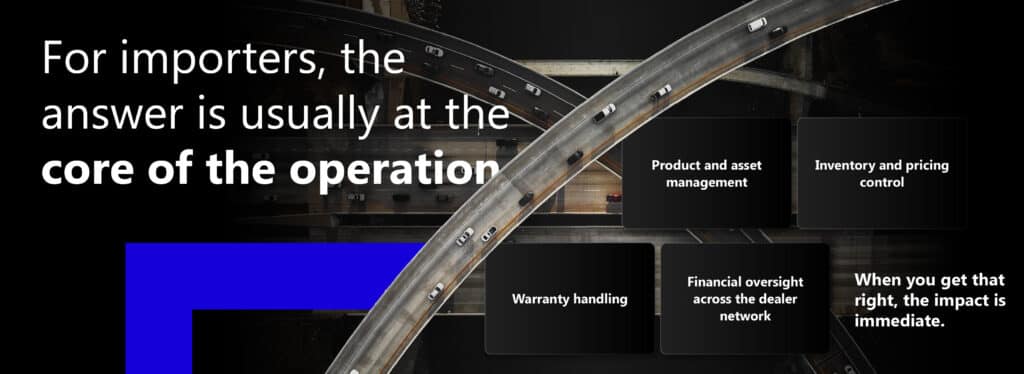
Processes become faster. Errors drop. Visibility improves across the entire network.
And importantly, you don’t need to rip everything out to get there.
From foundation to full network transformation
Once that foundation is in place, something interesting happens. Growth stops feeling like a challenge and starts feeling natural.
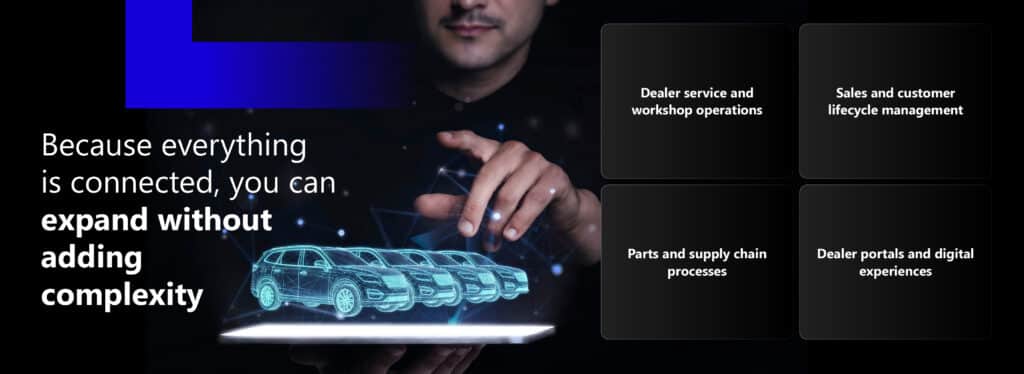
No reimplementation. No integration chaos. No duplicated data. Just one connected platform that scales with your business.
This is exactly where Annata’s A365 comes in.
Built on Microsoft Dynamics 365, Azure, Copilot, Power Platform, and Dataverse, A365 is not just an ERP layer. It’s an industry-specific platform designed for automotive, equipment, and dealer-based businesses.
That matters. Because instead of forcing generic automotive ERP processes into a highly specialized automotive operation, A365 brings:
- Preconfigured industry workflows for importers and dealers
- Native integration across finance, supply chain, service, and sales
- A shared data model across the entire dealer network
- Scalability from a single importer to a global, multi-entity operation
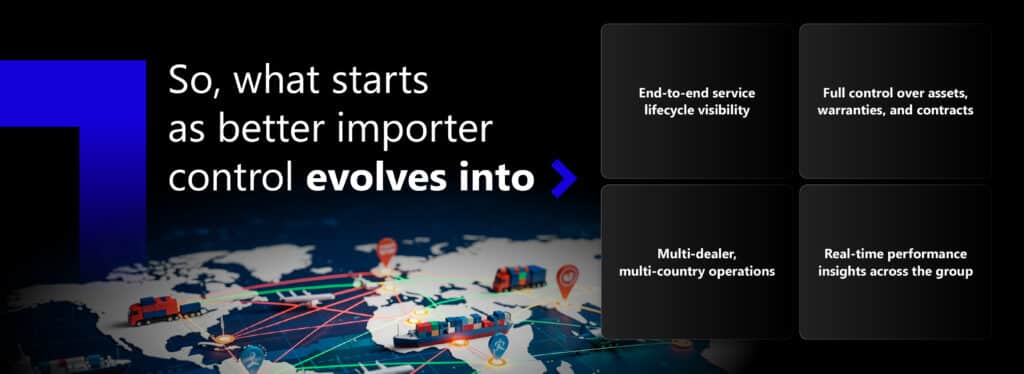
The steps feel small. But the impact is transformational.
AI only works if your foundation is right
There’s a lot of noise around AI in automotive right now. But here’s the truth.
AI is only as powerful as the data and processes behind it.
But none of that matters if your systems are fragmented. If your data is disconnected, AI doesn’t solve the problem. It amplifies it. That’s why a unified platform matters.
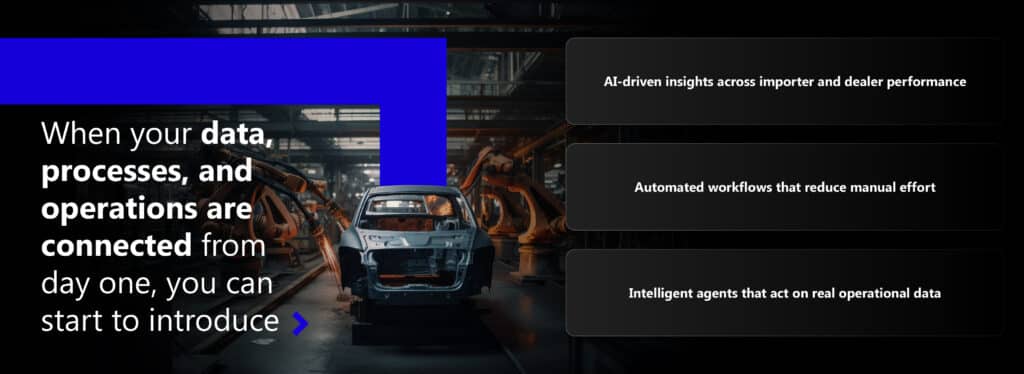
Not as a future ambition. But as a natural next step. This is where the combination of A365 and Microsoft becomes even more powerful. Because A365 is built on Microsoft’s ecosystem, businesses can naturally extend into:
- AI capabilities through Microsoft Copilot and Azure AI
- Advanced analytics and reporting across the entire operation
- Low-code automation to adapt processes quickly
All without needing to bolt on disconnected tools. AI becomes embedded into the way your business runs, not layered on top of it.
Growth without limits
Growth in automotive today isn’t solely about selling more vehicles. It’s about:
- Expanding service revenue
- Improving customer lifetime value
- Scaling across regions without adding complexity
- Responding faster to market changes
And that requires a different kind of automotive ERP. One that doesn’t just support your business as it is today. But one that is built to grow with it.
The real question
ERP used to be about control. Now, it’s about capability. The automotive businesses that are pulling ahead aren’t the ones with the most systems. They’re the ones with the most connected ones.
So the question isn’t whether you have an automotive ERP. It’s this: Is your automotive ERP helping you grow… or quietly slowing you down?
Claim your FREE access to our Digital Experience Center and explore how one platform can transform the way your automotive business runs.